
Download Full Report
Available in English, Portuguese, Spanish, and Swahili.
Key Findings:
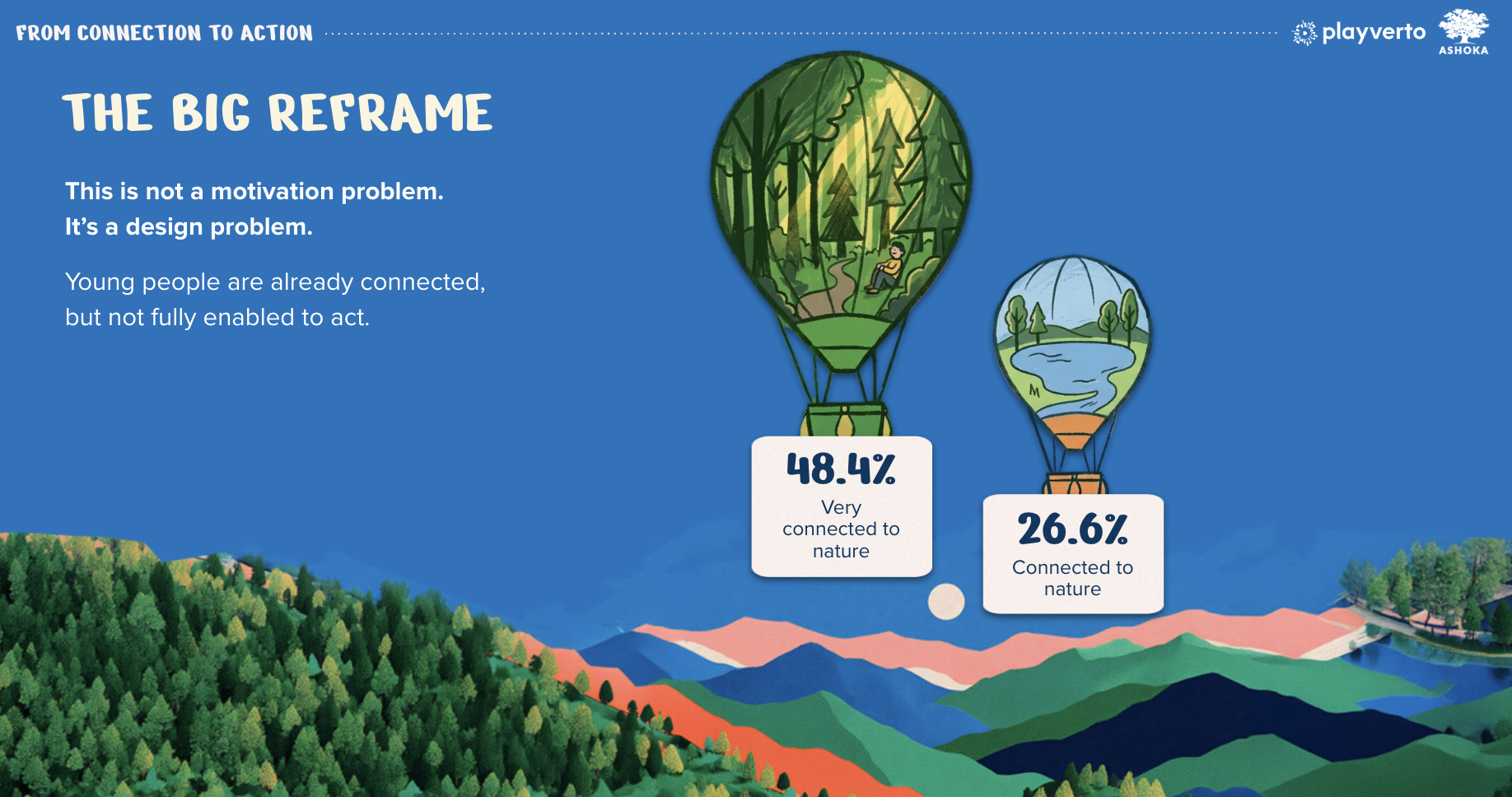
This is not a motivation problem. It’s a design problem.
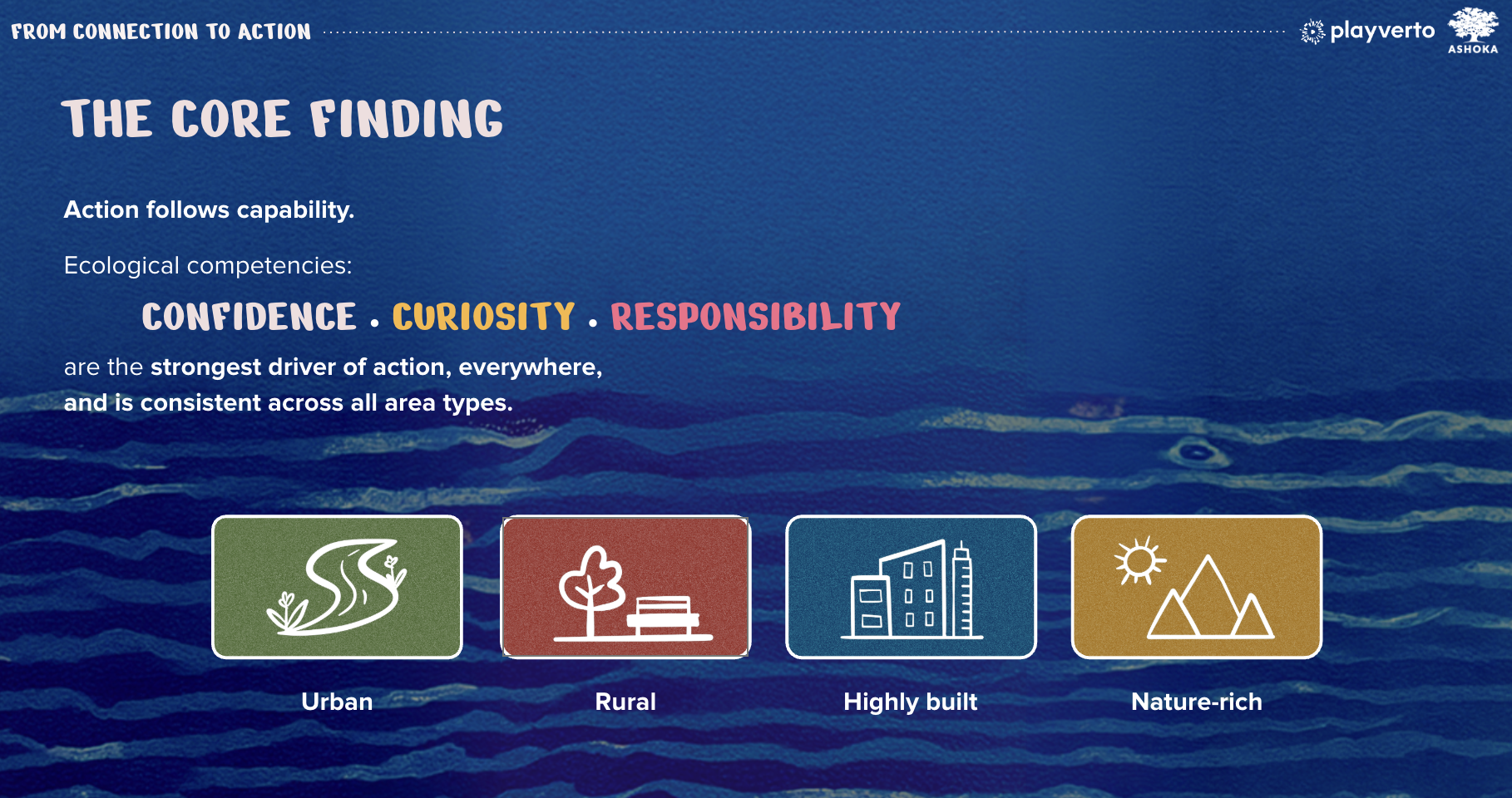
Action follows capability.
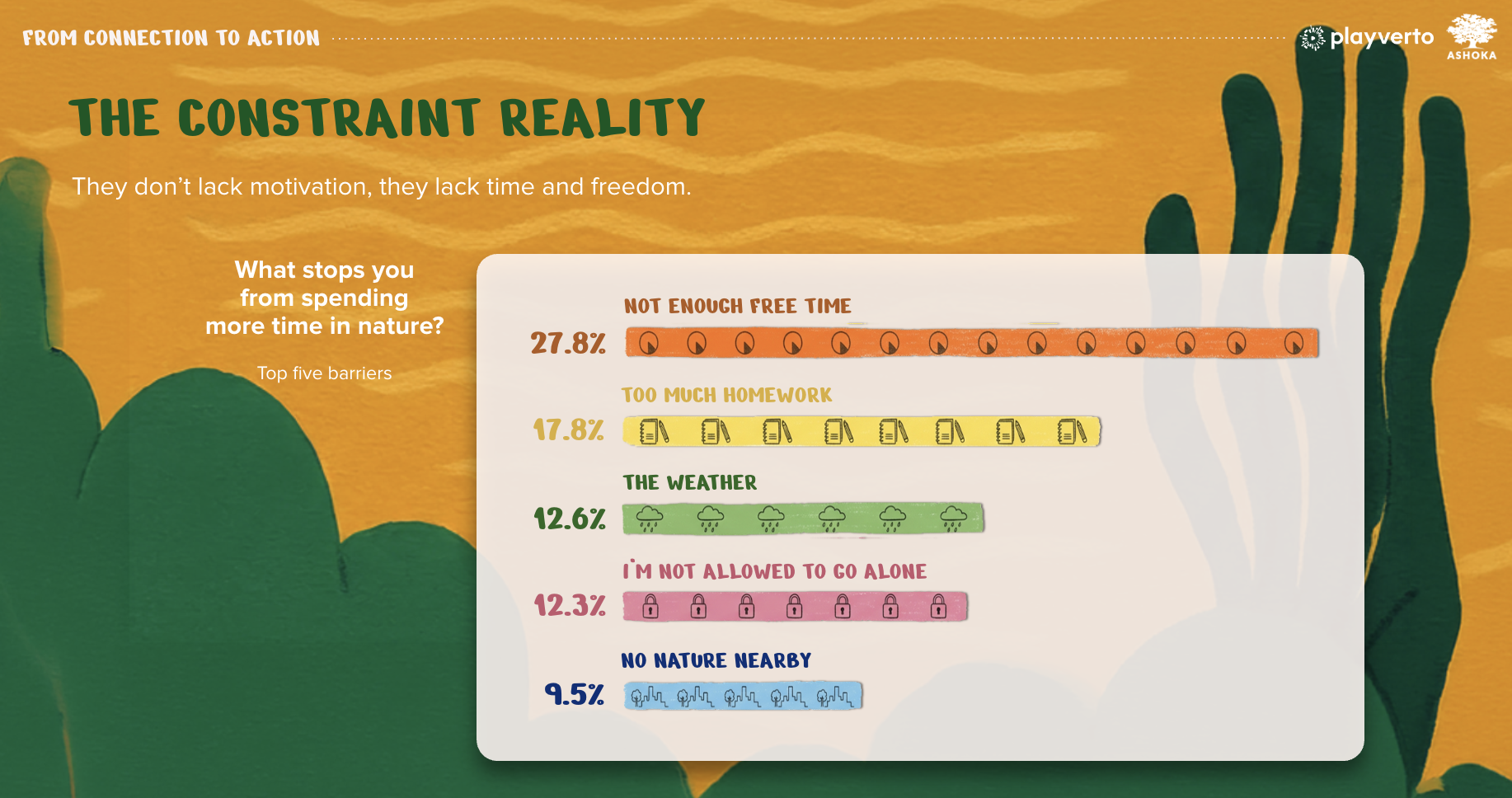
Young people don’t lack motivation, they lack time and freedom.
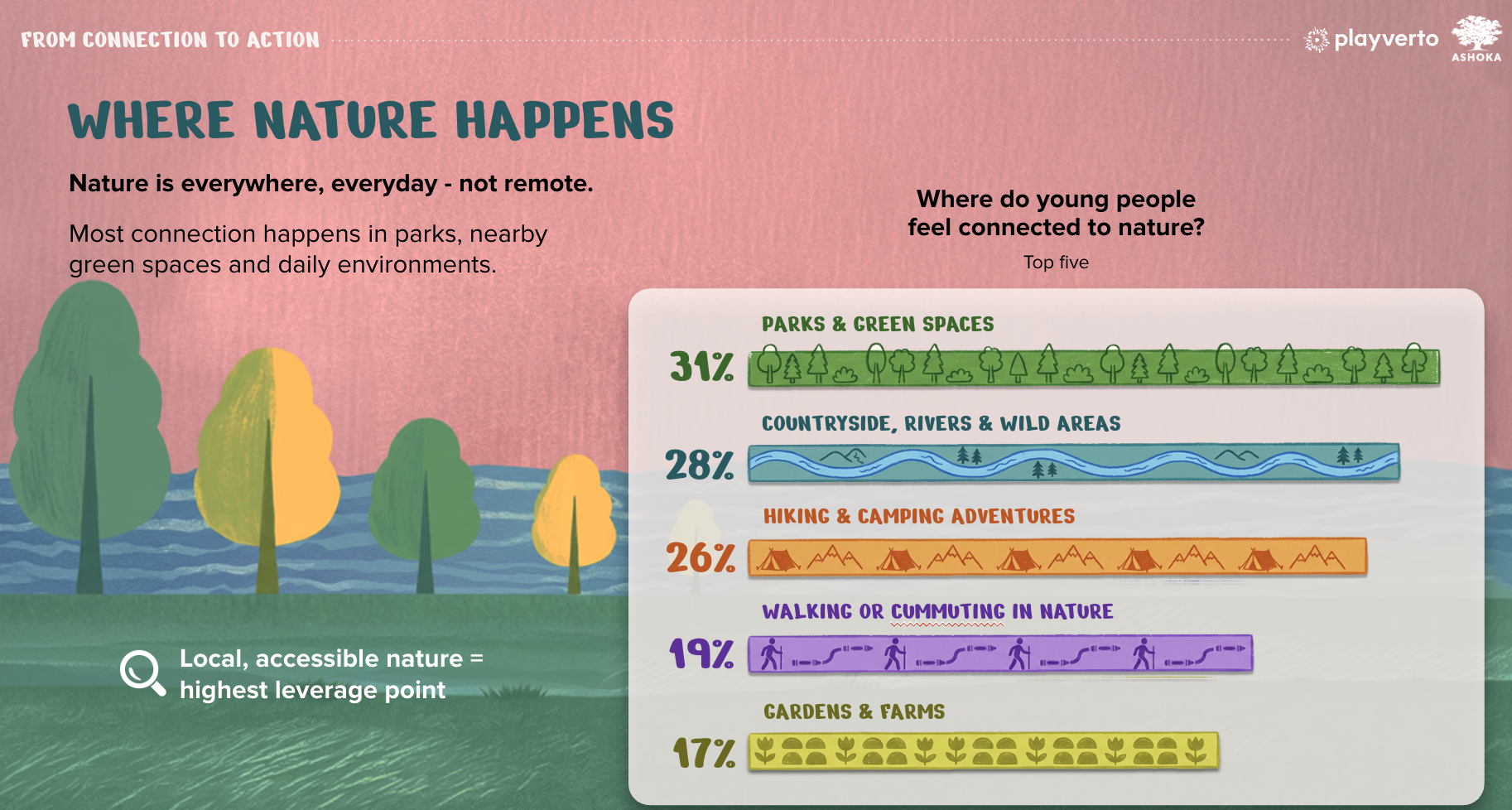
Nature is everywhere, everyday – not remote.
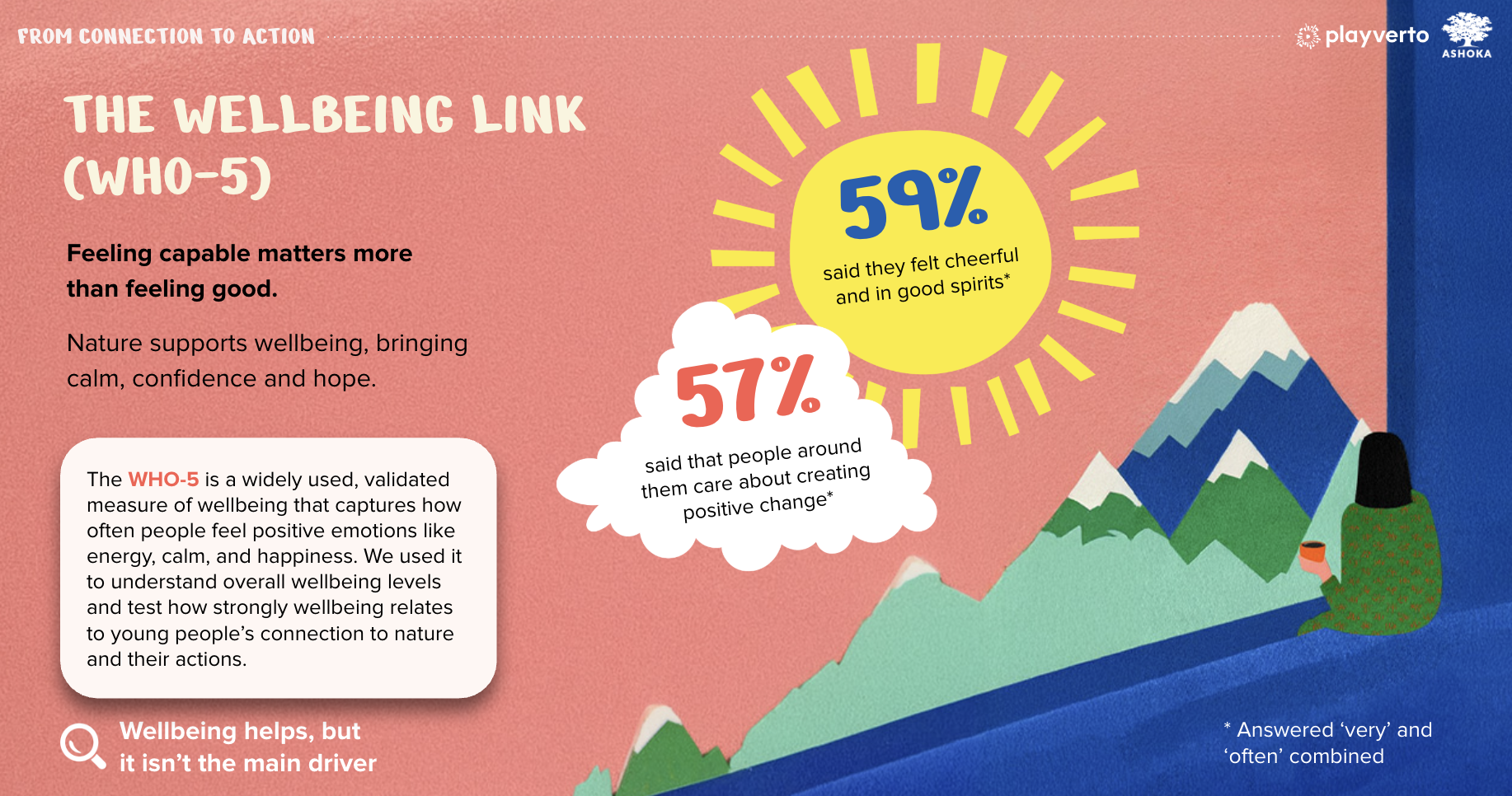
Feeling capable matters more than feeling good.
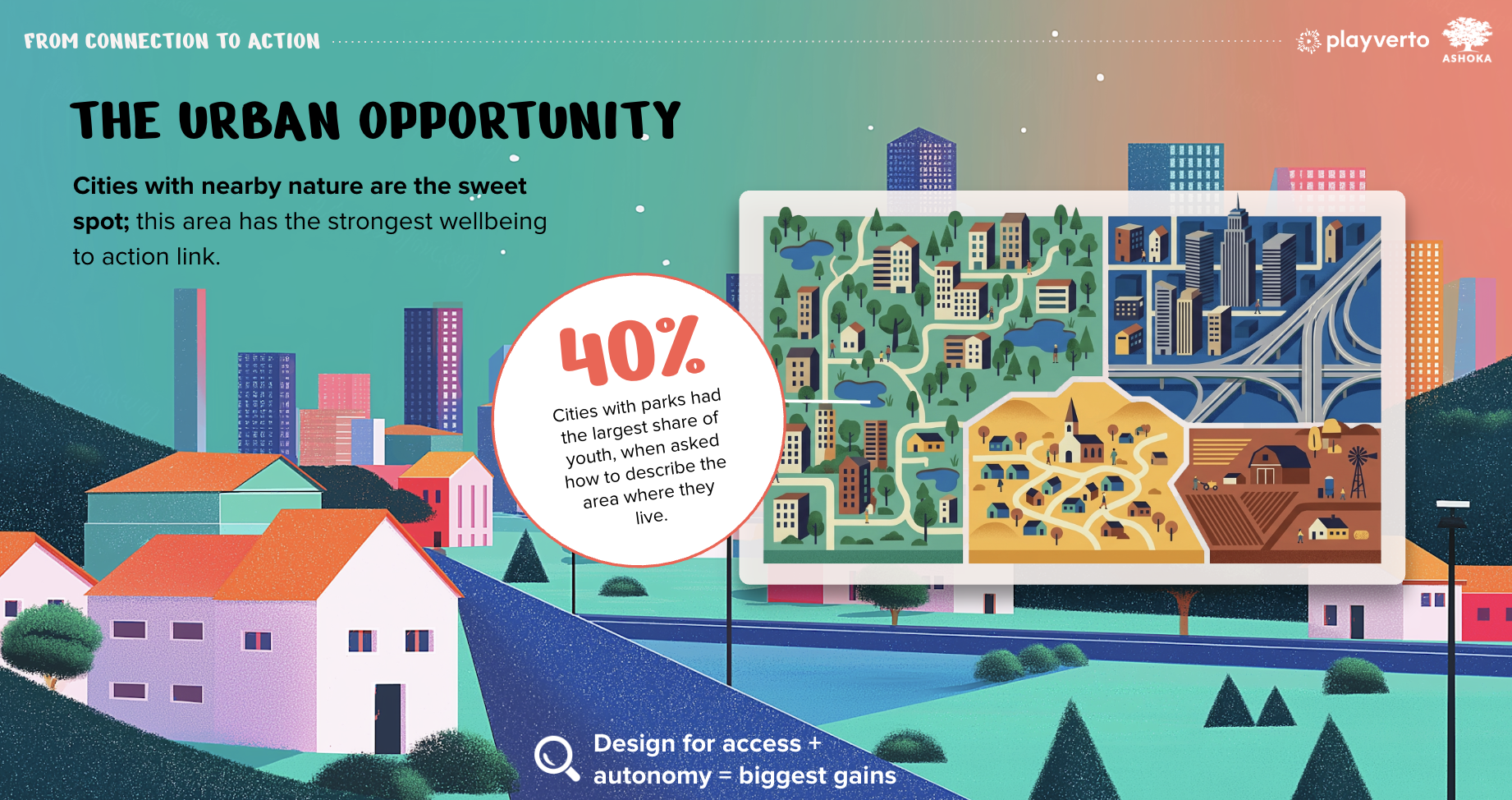
Cities with nearby nature are the sweet spot; this area has the strongest wellbeing to action link.
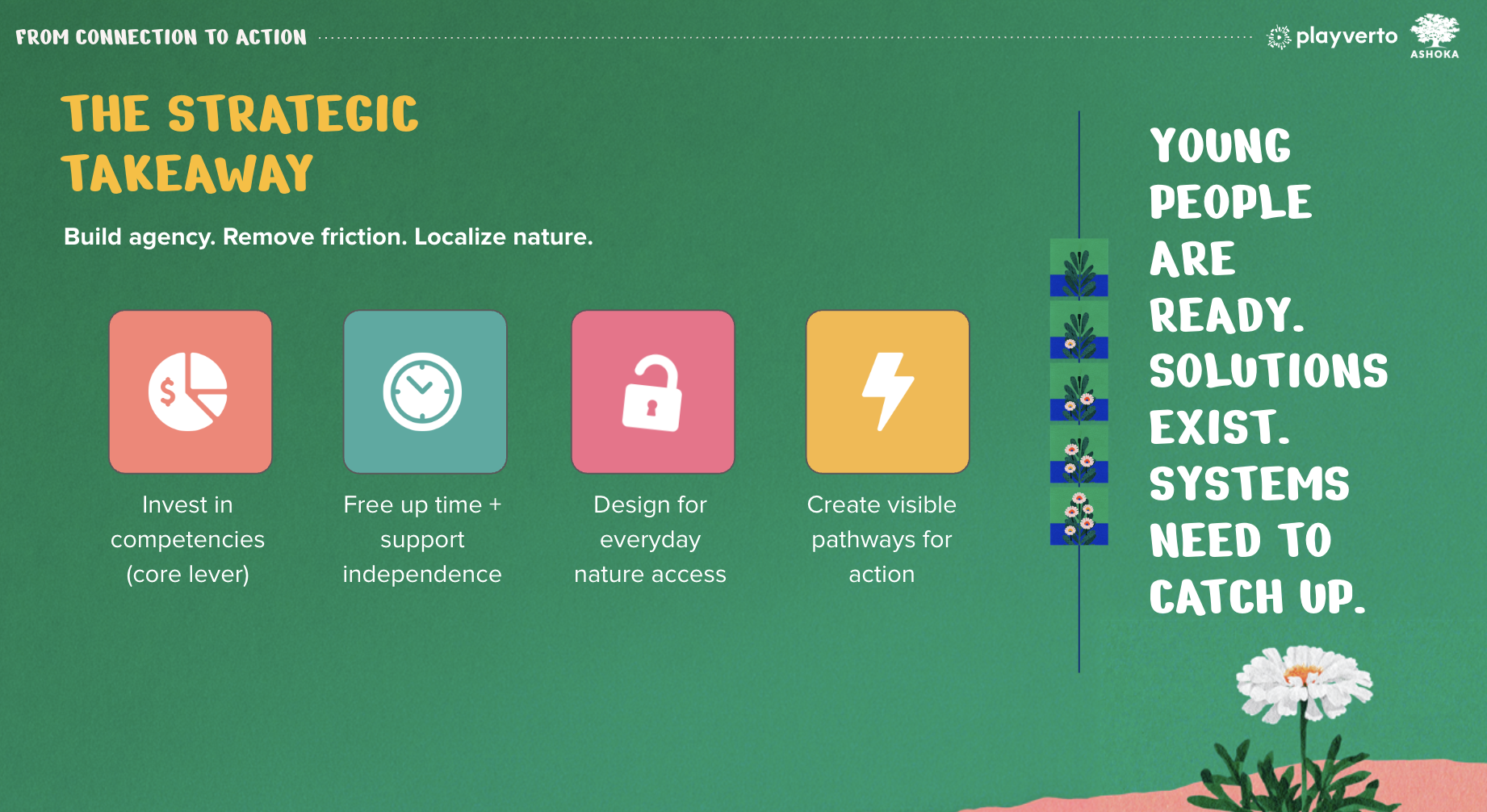
Build agency. Remove friction. Localize nature.
Response Tracker – Geographic Distribution:
Our Ambition is to:
-
Reimagine schools as intergenerational hubs for nature connection, with 50% of schools and teacher networks adopting nature-based learning practices
-
Celebrate 50 national, provincial/state, or city governments adopting nature connectedness policies - green spaces, curricula, rights frameworks etc - by 2030
-
Double the number of places a child engages with nature each week and triple the amount of time engaged in unstructured, self-directed nature play.
-
Mobilize $100M in education and health funding toward strengthening children’s connection with nature.
-
Together, be part of a global narrative change where a child’s love for and connection with nature is treated as a fundamental right and public good.

What does the survey explore?
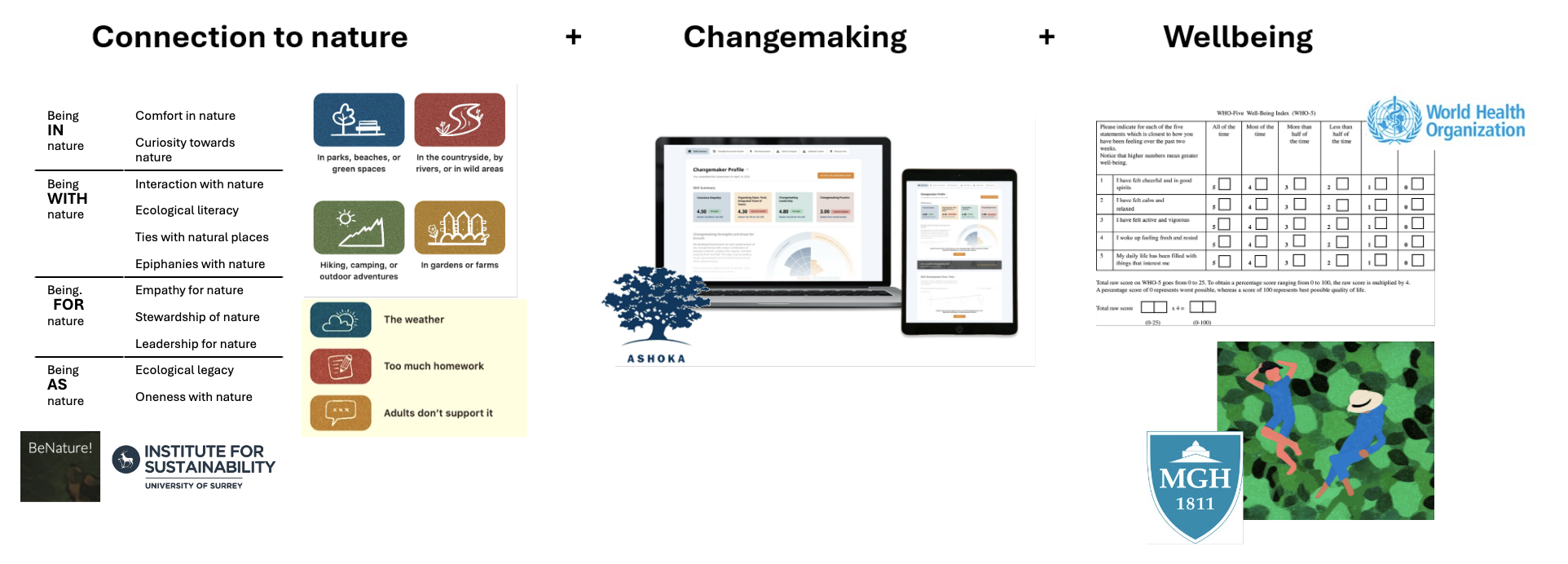
For the first time ever, we’ll be able to understand the links between access, agency, and wellbeing.
This survey draws together best-in-class indicators to assess the three dimensions we are studying:
1. For a child’s nature connection, we incorporate the field-defining BeNature and ACHUNAS frameworks.
2. For the way young people show up for nature, we layer in the authoritative Ashoka Changemaker Index.
3. And for how that makes them feel, we use the psychometrically-sound and widely-validated WHO-5.
We ask young people about:
Their daily and weekly experiences with nature: how much time they spend outdoors, what activities they enjoy, and what barriers they face.
Their feelings and attitudes toward nature: whether they feel connected, curious, anxious, or indifferent.
The impact of nature on their mood, learning, creativity, and overall well-being
How climate change, pollution, and urbanization are shaping their relationship with the environment
Their ideas and hopes for making nature more accessible and meaningful for themselves and their communities.
Why is this survey needed?
Humanity is facing a planetary poly-crisis: climate change, biodiversity loss, pollution, and a growing disconnection between people and nature.
This disconnection is especially acute among children and teenagers, who are spending less time outdoors and have fewer opportunities for unstructured play and exploration in nature.
Focusing on children’s connection to nature can be catalytic to solving the disconnection!
Help us understand how to:
- Improve youth wellbeing;
- Advance systemic environmental shifts; and
- Demonstrate that the connection to nature is a public good

We Learn by doing!
NYC Climate Week 2024
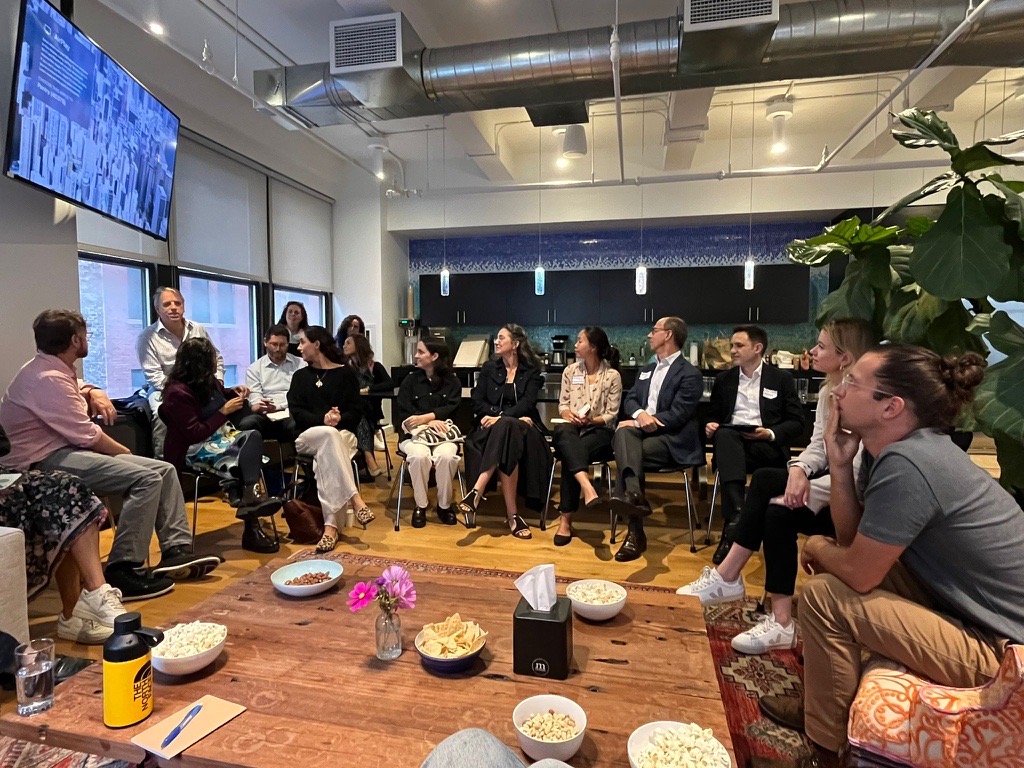
In September 2024, six Ashoka Fellows from around the world connected
at NYC Climate Week
Joaquin Leguia
Founder of the Association for Children and their Environment (ANIA) and has been an Ashoka Fellow since 2003. Through his innovative “Children’s Lands” initiative, Joaquin empowers children in Peru and beyond to take stewardship of natural spaces, fostering environmental responsibility and leadership from a young age.
Lais Fleury
Founder of Expedição Vaga Lume (Firefly Expedition), a project that delivers libraries to rural communities in the Brazilian Amazon and trains teachers to become “Reading Mediators.” By distributing libraries and providing on-site training in remote villages, Lais is fostering literacy and a love of reading among children, expanding their opportunities for personal development.Lais is currently working at Alana, a Brazilian organization dedicated to promoting the rights and well-being of children, where she continues her work in social innovation and advocacy.
Lenore Skenazy
Founder of the Free-Range Kids movement, championing a cultural shift in the U.S. from fear-based, overprotective parenting to one that trusts children with reasonable independence. Through her nonprofit Let Grow, Lenore works with parents, schools, and lawmakers to make it easy, normal, and legal for children to experience autonomy and free play, which are essential for healthy development. Her advocacy has led to legislative changes in multiple states, widespread adoption of free-play initiatives in schools, and a growing national conversation about the importance of childhood independence.

Michael Sani
Founder of Bite the Ballot, Michael addresses the chronic underrepresentation of youth in the democratic process by creating peer-led, grassroots and digital initiatives that make politics accessible, engaging, and relevant to young people. His innovative approach includes interactive educational games, a nationwide network of young ambassadors, and partnerships with major media and tech platforms to reach youth where they are.
Paula Daniels
Founder of the Los Angeles Food Policy Council and co-creator of the Good Food Purchasing Program, Paula pioneered a procurement-based strategy that enables schools, cities, and other major buyers to align their food sourcing with core values such as supporting local economies, fair labor, animal welfare, and nutrition.

Sharon Danks
Founder of Green Schoolyards America, leading a global movement to transform traditional asphalt schoolyards into vibrant, nature-rich environments that foster children’s well-being, learning, and play while enhancing urban ecological health. By building interdisciplinary partnerships and influencing policy at school district, municipal, and state levels, Sharon is unlocking new funding streams and embedding green schoolyard approaches into public infrastructure planning.
Using an Ashoka methodology to assess underlying decision-making architectures, the group identifies the need for better field-wide measurements to shift the conversation and unleash demand for what works.
A Call to Action
That group of Ashoka Fellows commit to piloting something in a year or less.
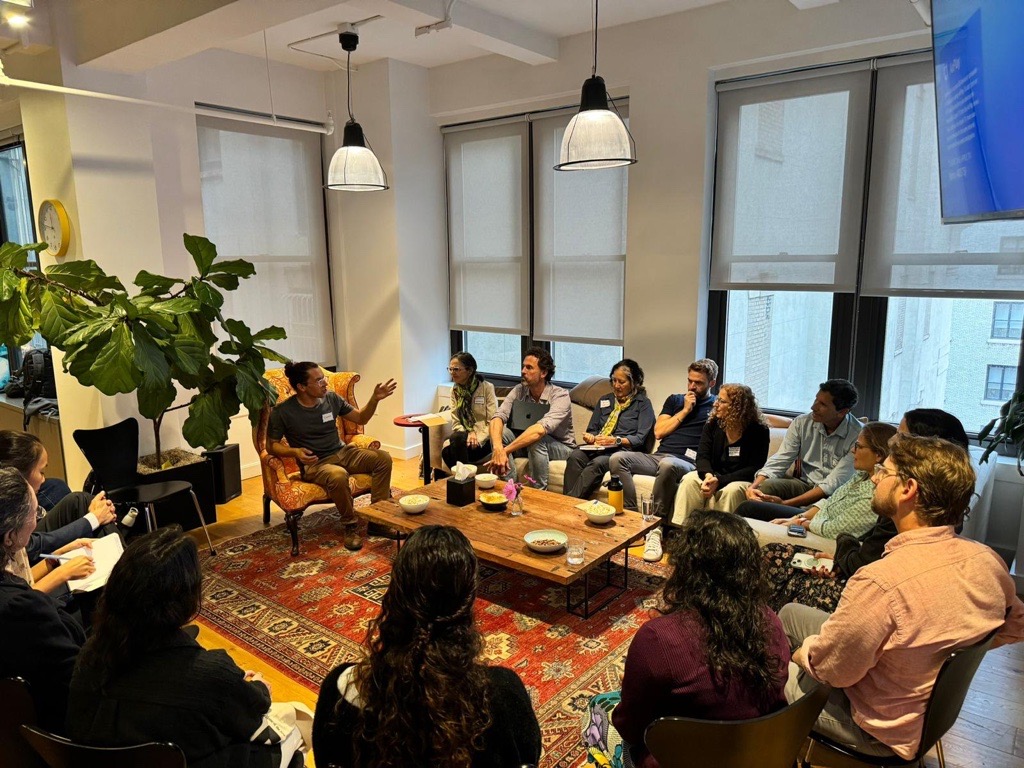
Event at Idealist.org
They shared their vision for a global, youth-powered system of measures, surveys, and -someday- actionable global indexes to drive demand for existing (and new!) efforts that strengthen the child + nature bond.
Survey conception and creation
Over the next several months, the Ashoka community engages global experts to learn from prior efforts and clarify our unique contribution.
Globally
While children’s connection to nature is well-researched, experts stressed the value of centering young people’s lived experiences, grounding the survey in diverse contexts, and building on existing indices.
Based on this feedback, we wove together the BeNature! framework, the WHO-5, Ashoka’s Changemaker Index, and questions designed by young changemakers themselves.
Survey launch and outreach
Our goal: gather more than 2,000 complete responses by the end of October 2025.
Globally
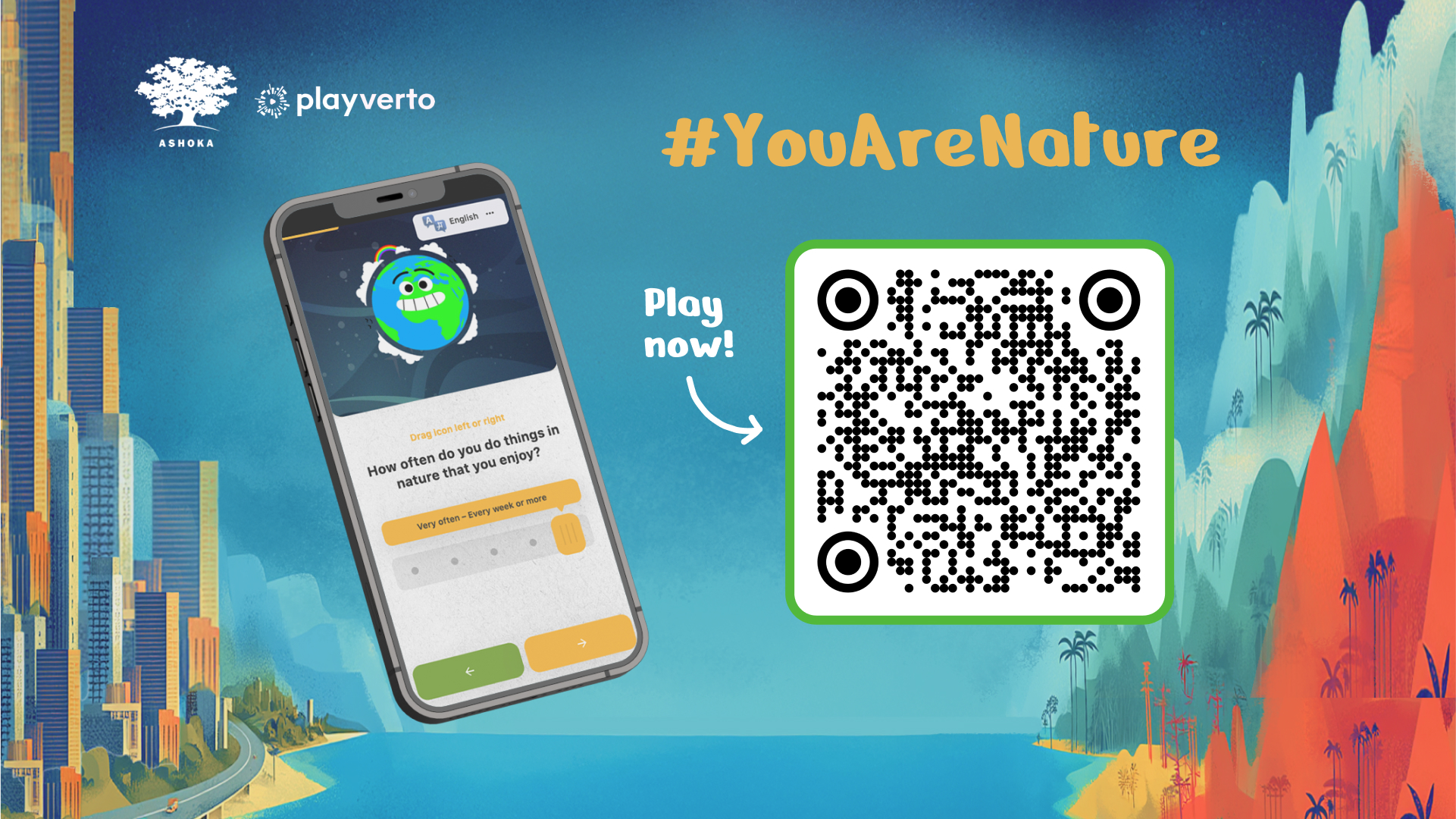
We partnered with Play Verto, whose engaging and gamified survey tools make data collection more accessible and inclusive, to develop and deploy our global survey in four languages: English, Swahili, Spanish, and Portuguese.
Shareout at COP30
Belém - PA, Brasil
We shared the preliminary findings at COP30 in Brazil, November 2025.
Design next steps
Globally
As we learn about the state of child-nature connection and refine our ability to showcase what works, we want to share field-wide measures, tools (like a global data commons), and strategies with our growing community of collaborators.
Have ideas?
Email Simon Stumpf ([email protected]) and Luana Soares ([email protected]) from the People & Planet Team with your ideas!
Frequently Asked Questions
What questions did you ask young people?
We asked a series of questions about one connects with nature, what prevents them for spending more time in nature, competencies like curiosity or empathy for nature, how they are feeling, how they and the people around them are showing up for the environment, and the name of the closest big city so we can make general observations about global similarities and differences.
These questions are based on various existing frameworks and assessment tools, namely BeNature, ACHUNAS, the Ashoka Changemaker Index, and the WHO-5.
What personal data was collected, if any?
We did not collecting personal data. We did ask the year in which the survey respondent was born to ensure that we only keep data form those 10 and older, and to focus our research on those between the ages of 10-19.
Country and year of birth are only asked if cookies are accepted.
Where is the data stored and how will it be shared?
PlayVerto designed the survey system and hosts the data. Given that the data is not personal and all responses are anonymous, we can share it with third party collaborators like university researchers and collaborating organizations. We expect that reports based on these findings will be shared at global climate events and in academic journals.